|
|
|
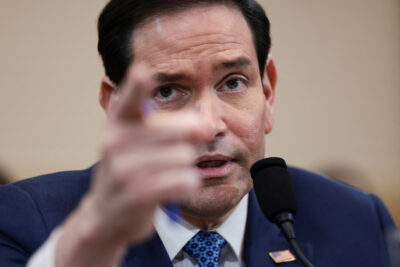
Rubio Announces New Cuban Entities Subject to Sanction
|
The Secretary of State seems to know precisely where to tighten the noose on the ailing communist regime. Rubio on Thursday afternoon: Today, we are targeting the network that enables and funds Cuba’s subversive and radical operations. Pursuant to sanctions authorities created by President Trump’s groundbreaking Cuba Executive Order, I am designating the following entities ( Rubio). And he lists five key arms of the communist regime. More from Rubio: The Trump Administration will no longer tolerate radical Marxist regimes in our hemisphere seeking to threaten U.S. national security and engage in influence operations to export their poisonous and evil “revolution” to our country and around the world ( Rubio). Three international hotel chains have received the message and are pulling out: three international hotel chains and a bank that processes Visa and Mastercard transactions withdrew business from the communist nation to avoid violating new U.S. regulations ( New York Times).
|
|
|
|
|
|
Department of Justice Issues Superseding Indictment on Southern Poverty Law Center
|
The new indictment has more details, greater precision and more information on the dollar figures and the nefarious purposes they were used for: According to the DOJ, the SPLC “secretly funneled” more than $3 million in donor funds between 2014 and 2023 to numerous individuals associated with extremist organizations, including the Ku Klux Klan, United Klans of America, the National Socialist Movement, participants in the Unite the Right rally and the Aryan Nations-affiliated Sadistic Souls Motorcycle Club ( Fox News). The indictment alleges $4.1 million used for: a. Attend extremist group rallies across the country; b. Host extremist group rallies throughout the country; c. Grow existing chapters of extremist groups; d. Create new chapters of extremist groups; e. Recruit new individuals into extremist groups; f. Make donations to extremist group leaders; g. Purchase materials for cross burnings; h. Purchase materials to make Ku Klux Klan robes and hoods; i. Create racist paraphernalia that extremist groups sold at rallies; j. Publish extremist literature used in the recruiting of more members; and k. Pay everyday living expenses, which allowed the Fs to focus on their extremist groups rather than seeking other employment ( O’Neil).
|
|
|
|
|
|
New York Times Buries the Lead on Graham Platner’s Alleged Sexual Violence
|
The New York Times piece is titled: “Several Women Who Dated Graham Platner Recall ‘Unsettling’ Behavior.” But this, halfway into the piece, is more than “unsettling”: But [Lyndsey Fifield] said he regularly grabbed her by the shoulders — sometimes hard enough to leave marks — and, on one occasion, yanked her out of a cab by her wrist after an argument when she wanted to stay in the car. During one argument, she recalled, he twisted her arm behind her back, shoved her into a bedroom and held the door closed from the other side so she couldn’t get out, telling her to remain there until she was “calm.” Eventually, Ms. Fifield said, she fell asleep and left the next morning. The Times also goes into Platner’s threats of sexual violence: He had what she described as a “warrior ethos” and would fantasize about killing people he deemed a threat, she said. She said he told her that rape was about power. It was something that stuck with her through the years, Ms. Fifield said. “He said this a lot: If anybody ever broke in here, I would rape them,” she recalled, saying that he added that it would not be in “a sexual way, not in a gay way” ( New York Times). More from Jennifer Oliver O’Connell at RedState: Not sure whether Platner’s denials will be enough this time ( RedState).
|
|
|
|
|
|
Trump to Nominate Todd Blanche as Attorney General
|
The acting attorney general was widely expected to be nominated by Trump. His journey to confirmation may not be perfectly smooth. Financial Times: “We are going to make him permanent attorney-general,” the president said at a dinner at the White House on Wednesday night, in a video posted on social media by a White House aide…. Under his interim leadership, the Department of Justice secured prominent indictments against Trump’s personal and political adversaries, including former Cuban president Raúl Castro, former FBI director James Comey and the Southern Poverty Law Center, a civil rights organization ( Financial Times). Bloomerg reports on the challenges Blanche may face: Concerted GOP pushback that prompted the Trump administration to retreat on its $1.8 billion fund for victims of alleged government “weaponization” underscores deeper tensions between DOJ leaders and their own party in Congress. The discord stems partially from former Attorney General Pam Bondi marginalizing her legislative affairs team and deprioritizing Hill outreach, including to fellow Republican lawmakers, said three people familiar with the situation ( Bloomberg). Trump’s video announcement: ( Scavino).
|
|
|
|
|
|
California’s Counting Delay: Absurd and Corrosive of Trust
|
Joel Pollack at the California Post: California takes forever to count ballots. And there’s no excuse. No excuse for the delays, no excuse for the Election Night leads that are mysteriously reversed as the mail comes in. It doesn’t have to be this way. California’s “electile dysfunction” is not a necessary condition. It’s not about fairness, or access, or the size of the population. It’s a political choice ( Post). Hugh Hewitt: This recurring absurdity that happens with every election is the result of deliberate, conscious choices made by @GavinNewsom and CA Democrats –which have super-majorities in both chambers in the statehouse. They could fix it but don’t want to. This should be a topic at every appearance Governor Newsom makes as he campaigns for president. He could have fixed this for eight years, but he and state Dems haven’t, won’t, and don’t want to ( Hewitt). Jennifer Van Laar at Red State: California’s vote casting and counting processes are beyond screwed up and I fully believe Dems and the NGOs like CHIRLA are currently engaged in trying to rig the vote. Knowing the state’s funky laws and processes will help you keep up with what’s going on and not be fooled by ragebait ( Van Laar).
|
|
|
|
|
|
The Long Road to California’s Vote-Counting Chaos
|
An earlier piece from Van Laar (above) explains how we got here: Believe it or not, California’s election process wasn’t always so lengthy or chaotic. How did we get here? In 2016 a trio of bills were passed that, together, significantly changed how California’s election process works: SB 450, Voter’s Choice Act required mail ballots to be sent to all voters in a participating county…. AB 1921, legalized ballot harvesting statewide…. No training or accreditation required; no registry of ballot harvesters or chain of custody…. AB 1461, Motor Voter Act – automatically registers people to vote when they interact with the DMV unless they opt out. Then, in 2020 vote-by-mail ballots were sent to all registered voters due to the COVID pandemic. Since nothing in government is ever temporary, that practice was made permanent ( RedState).
|
|
|
|
|
|
Iran Today: Far Weaker; the Middle East: Much Healthier Than Before Our Military Action
|
Many proponents of Operation Epic Fury have had a sense of angst that we need to “finish the job” in Iran. Whatever happens with regard to further kinetic action, former Secretary of State Condoleezza Rice argues that the Middle East is already far better off: It drew America, Israel and the Arab states closer together through defense cooperation and intelligence sharing. In this regard, Israel has never been more secure…. Most important, along with Operation Midnight Hammer last June, Operation Epic Fury set back Iranian nuclear ambitions significantly. It will be a long time before Iran can build a viable nuclear weapon…. In sum, Iran is far weaker today than it was in February. No amount of Iranian propaganda can mask this reality. America’s near-term goals should be to keep it in that weakened state, to strengthen the region’s political realignment, and to make certain that President Trump’s promise that Iran will never possess a nuclear weapon is fulfilled ( Wall Street Journal).
|
|
|
|
|
|
Hezbollah Today: Still a Terrorist Army, But a Shadow of Its Former Self
|
Israelis, particularly Israelis in the north, are fatigued from three years of war and the perpetual retreat to bomb shelters. But, it’s worth remembering: On October 8—after the Hamas massacre—there were plenty of pundits and military analysts who were not convinced Israel could withstand a full scale assault from Hezbollah. Today? Israel Hayom: The IDF’s top brass is convinced that Hezbollah is a semi-dismantled organization that has absorbed the hardest blow in its history. It had thirty thousand fighters on October 6, 2023; since then, 8,000 have been killed and about the same number wounded. “Even a jihadist enemy is dying for a ceasefire” ( Israel Hayom). Israel Chief of Staff: Hezbollah, the center of Iran’s regional weight, has been weakened ( Open Source).
|
|
|
|
|
|
Surprise: Antisemitic Crimes Spike in New York City
|
No: We should not be surprised. But we ought to pay attention. If the people of our nation’s largest city elect a Muslim who has run with antisemites and engaged in plenty of behavior that encourages antisemitic behavior, we ought to expect this. Times of Israel: Hate crimes targeting Jews spiked in New York City last month, compared to previous months, according to NYPD data released on Wednesday. There were 41 confirmed hate crimes targeting Jews in the city last month, the data showed. The figure amounted to 60 percent of all hate crimes in the city in May, marking a slightly higher percentage than normal, and an average of one antisemitic hate crime every 18 hours…. The antisemitic hate crimes in May marked a jump of 46% over the average for the previous three months. There were 30 confirmed antisemitic crimes in April, 32 in March, and 21 in February ( Times of Israel).
|
|
|
|
|
|
Support for Same-Sex Marriage Collapses Among Republicans
|
The American public was lectured ad nauseum prior to and after the Obergefell case in 2015 on legalized same-sex marriage: What does my right to marry who I want to have to do with you? It’s now been over decade since that decision, and the American people know that the activists in the LBGTQ world never had an intent for any sort of cultural détente. Suzan Bowdey at Washington Stand: In one of the most dramatic sea changes, millions of Americans are walking away from what Obergefell unleashed on the nation in 2015. According to the latest Gallup poll, just released Wednesday, only 37% of Republicans now say same-sex marriage should be legal — a whopping 18-point drop since 2022 (55%). While Democrats still strongly back the redefinition of marriage at 87%, skeptical Independents and the GOP are driving the country’s numbers down to 65% support overall, 6% lower than 2022 and 2023. In at least 11 states, legislators have even introduced bills to roll back same-sex marriage. While the buyer’s remorse on Obergefell may be the most striking, what the nation is witnessing with this sustained pushback on Pride may be permanently changing the corporate, state, and political landscape ( Washington Stand). The Gallup release: After two decades of rising support for LGBTQ+ issues, U.S. attitudes have plateaued and begun to slide back modestly ( Gallup).
|
|
|
|